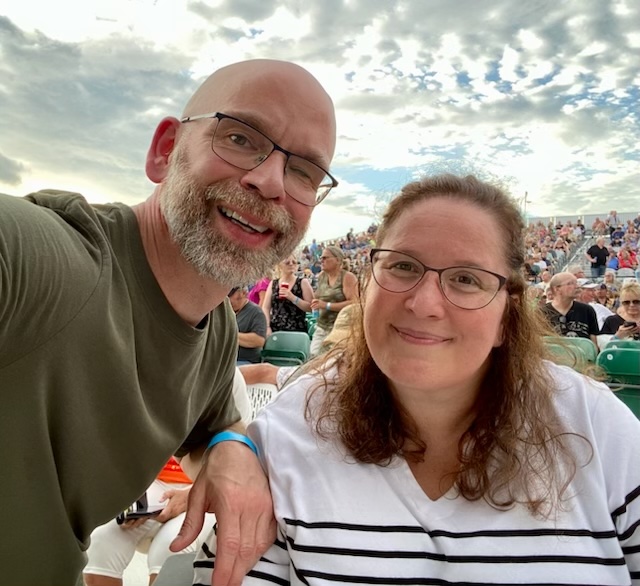
Concert tickets might sound like a small thing, but for Dan and me, they’re not. Live music is one of our favorite ways to feel connected, normal, and joyful beyond the daily realities of living with Multiple Sclerosis.
A couple of weeks ago, I tried to buy tickets to see O.A.R. (among our favorite rock bands) at Frederik Meijer Gardens & Sculpture Park in Grand Rapids. We were so excited! The venue was close enough to make the trip manageable, and since we’d never been there before, it felt like the kind of experience worth planning for.

But when I asked about accessible seating, I was told I had to wait until the official public on-sale date.
Not ideal, but okay. I followed the rules.
Tickets went on sale at 9 a.m. Dan called the box office at 9:11.
Eleven minutes after tickets went on sale, every truly accessible seat was gone.
None left.
In a venue that holds 1,900 people.
To be clear: there were still a few so-called “accessible” options, but they weren’t genuinely accessible for me as a power wheelchair user. Pavilion seating would require me to transfer from my wheelchair, which I can no longer do. Lawn seating meant navigating uneven terrain and competing for space in ways that felt more like survival than inclusion.
That’s not meaningful wheelchair accessibility.
And that’s what’s so frustrating.
Accessible seating is supposed to remove barriers for people with disabilities—not create new ones through systems that effectively shut us out before we even have a fair chance.
I did what I was told. I waited. I followed the process.
The process failed.
This is what disability access often looks like: not always blatant exclusion, but policies and procedures that sound reasonable on paper while producing inequitable outcomes in real life.
Living with MS already means thinking ahead about mobility, energy, transportation, and logistics. Something as simple as attending a concert requires strategy. So when even buying accessible concert tickets becomes another obstacle, it’s more than inconvenient.
It’s exhausting and discouraging.
Because accessibility shouldn’t depend on luck, speed, or whether the system was designed with your real-life needs in mind.
It should mean equal opportunity from the very beginning.
This experience isn’t just about one O.A.R. concert. It reflects a broader pattern many disabled people know too well: being told to wait, trust the process, and follow the rules, only to discover the system was never truly built for you in the first place.
I don’t believe anyone intended to exclude me.
But intent alone doesn’t create access.
Action does.
And until accessible seating truly prioritizes equitable access for the people it was created for, too many of us will keep finding ourselves left out before the music even starts.
The post 11 minutes, 1,900 seats, and not 1 for me: when accessible seating feels anything but accessible appeared first on A Couple Takes on MS.
Source: acoupletakesonms.com