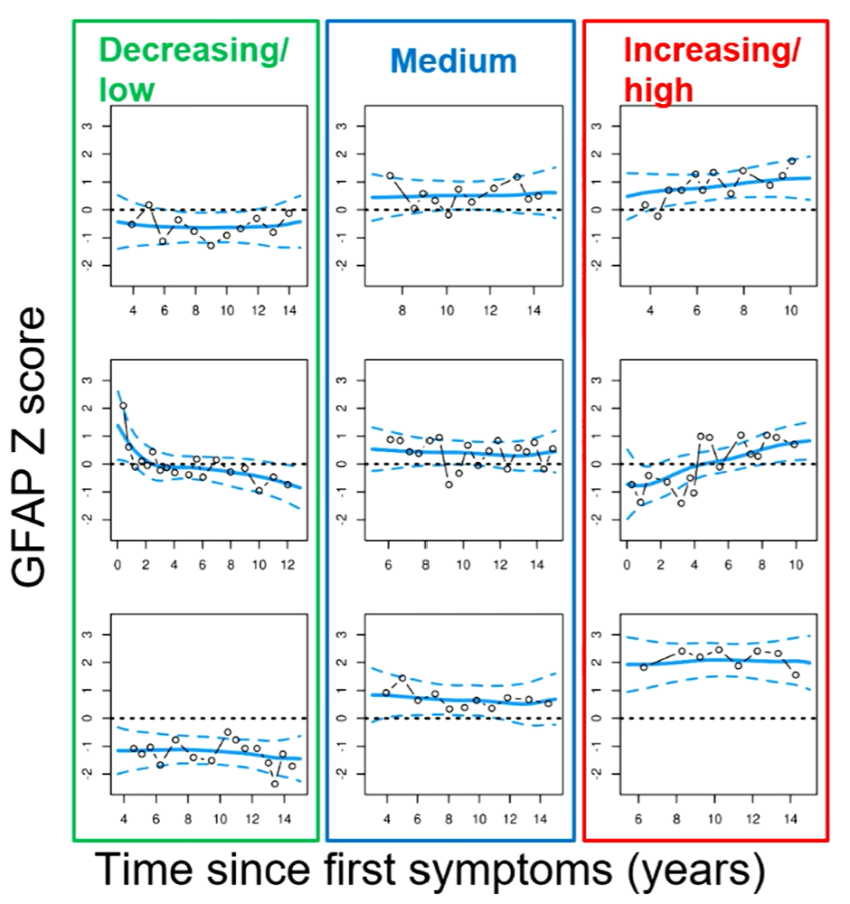
The question of whether GFAP (Glial Fibrillary Acidic Protein), a marker of disease progression, is meaningful at the individual level is no longer unanswered. Data from the Swiss MS cohort presented at this years ECTRIMS show that although GFAP levels can fluctuate over time, the overall trajectory may be significant, particularly in individuals with increasing or persistently high GFAP levels (see Figure below).

They found that patients with increasing or consistently high GFAP readings were more likely to exhibit a progressive phenotype, characterized by a higher number of PIRA (Progression Independent of Relapse Activity) events (see Figure below).

Whether this group of patients is actually amenable to treatment, however, remains an entirely different and more complex issue. Identifying a progressive trajectory through biomarkers like GFAP is one thing; determining whether these individuals will benefit from existing or future therapeutic interventions is a separate challenge altogether, requiring further investigation.
Source: multiple-sclerosis-research.org